


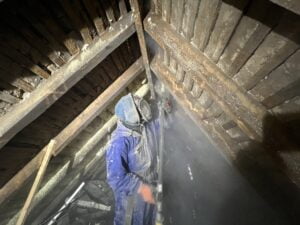
Everything You Need to Know About Dry Ice Cleaning
Dry ice blasting is a cleaning process that uses solid CO2 (carbon dioxide) pellets to clean surfaces. It’s a non-abrasive, environmentally friendly method that’s gaining popularity across various industries. In this blog, we answer some of the most frequently asked questions about dry ice blasting.
Q1: What is dry ice blasting?
A1:
Dry ice blasting is a cleaning technique that uses compressed air to propel dry ice pellets at high speed toward a contaminated surface. The impact of the dry ice pellets, combined with the rapid temperature drop, removes the contaminants without damaging the surface underneath. This method is effective for a variety of cleaning applications, including industrial equipment, food processing facilities, and historical restoration.
Q2: How does dry ice blasting work?
A2:
Dry ice blasting works through a process called sublimation, where dry ice pellets convert directly from solid to gas upon impact. When the pellets hit the surface, the extreme cold (-78.5°C or -109.3°F) causes the contaminants to become brittle and shrink, leading to their removal. The pellets then turn into CO2 gas, leaving no residue behind, which makes it a clean and environmentally friendly option.
Q3: What are the benefits of dry ice blasting?
A3:
Non-abrasive: It doesn’t damage the underlying surface.
Environmentally friendly: No secondary waste is produced since the dry ice sublimates into CO2 gas.
Effective cleaning: It removes contaminants, residues, and coatings effectively.
Safe: It is non-toxic and reduces the need for harsh chemicals.
Minimal downtime: Equipment can often be cleaned in place, reducing the need for disassembly.
Q4: What types of surfaces can be cleaned with dry ice blasting?
A4:
Dry ice blasting is suitable for a wide range of surfaces, including:
– Metal
– Wood
– Glass
– Plastics
– Concrete
It is often used in industries like automotive, aerospace, food processing, electronics, and historical restoration.
Q5: Is dry ice blasting safe for all types of equipment?
A5:
Yes, dry ice blasting is generally safe for most types of equipment. Because it is non-abrasive and leaves no residue, dry ice blasting safely cleans delicate and intricate machinery. However, it’s always best to consult with a professional to ensure it’s suitable for your specific application.
Q6: How does dry ice blasting compare to traditional cleaning methods?
A6:
No secondary waste: Unlike sandblasting or pressure washing, dry ice blasting leaves no secondary waste.
Less downtime: Equipment can often be cleaned without disassembly.
Environmentally friendly: No hazardous chemicals or solvents are needed.
Versatile: Effective on a wide range of contaminants and surfaces.
Q7: What are the limitations of dry ice blasting?
A7:
Initial cost: The equipment and dry ice pellets can be more expensive than traditional methods.
Maintain adequate ventilation at all times, as CO2 can accumulate and displace oxygen in confined spaces..
Not for all contaminants: Extremely hard coatings or very thick layers of grease may require multiple passes or alternative methods.
Q8: Can I perform dry ice blasting myself, or should I hire a professional?
A8:
While equipment can be hired for DIY dry ice blasting, an experienced operator will usually complete the work faster, safer, and more effectively. Professionals have the experience and knowledge to handle the equipment safely and effectively, ensuring optimal results and minimizing risks.